
If you work night shifts, sleep during the day or wake easily when light enters the room, you know how disruptive a bright bedroom can be. Even during Northern Ireland’s darker autumn and winter months, daylight, street lighting and small gaps around a window can make it difficult to settle or stay asleep.
The right window covering can help you take back control. We believe the best solution is not simply choosing a “blackout” fabric, but planning the complete system: the blind style, the fit, the window recess, the surrounding curtains and how easily you can adjust everything around your routine.
Why daytime sleepers need more than an ordinary blind
Your body responds to light. Daylight entering through a bedroom window can signal wakefulness when you are trying to sleep. This is particularly challenging after a night shift, when your sleep period may begin just as the rest of the household is starting its day.
Small gaps can make a big difference. A fabric may be highly opaque, yet light can still escape around the sides, above the headrail or beneath the bottom rail. For light sleepers, these bright lines can be just as irritating as light coming through the fabric itself.
Your bedroom may have more than one light source. Consider the glow from neighbouring homes, security lights, passing traffic, hallway lighting and screens. A successful sleep environment deals with the window and the wider room together.
Guidance from organisations such as the BBC and BEN also highlights the importance of creating a dark, quiet and comfortable place to sleep after working nights.
Day and night blinds: flexible control for changing routines
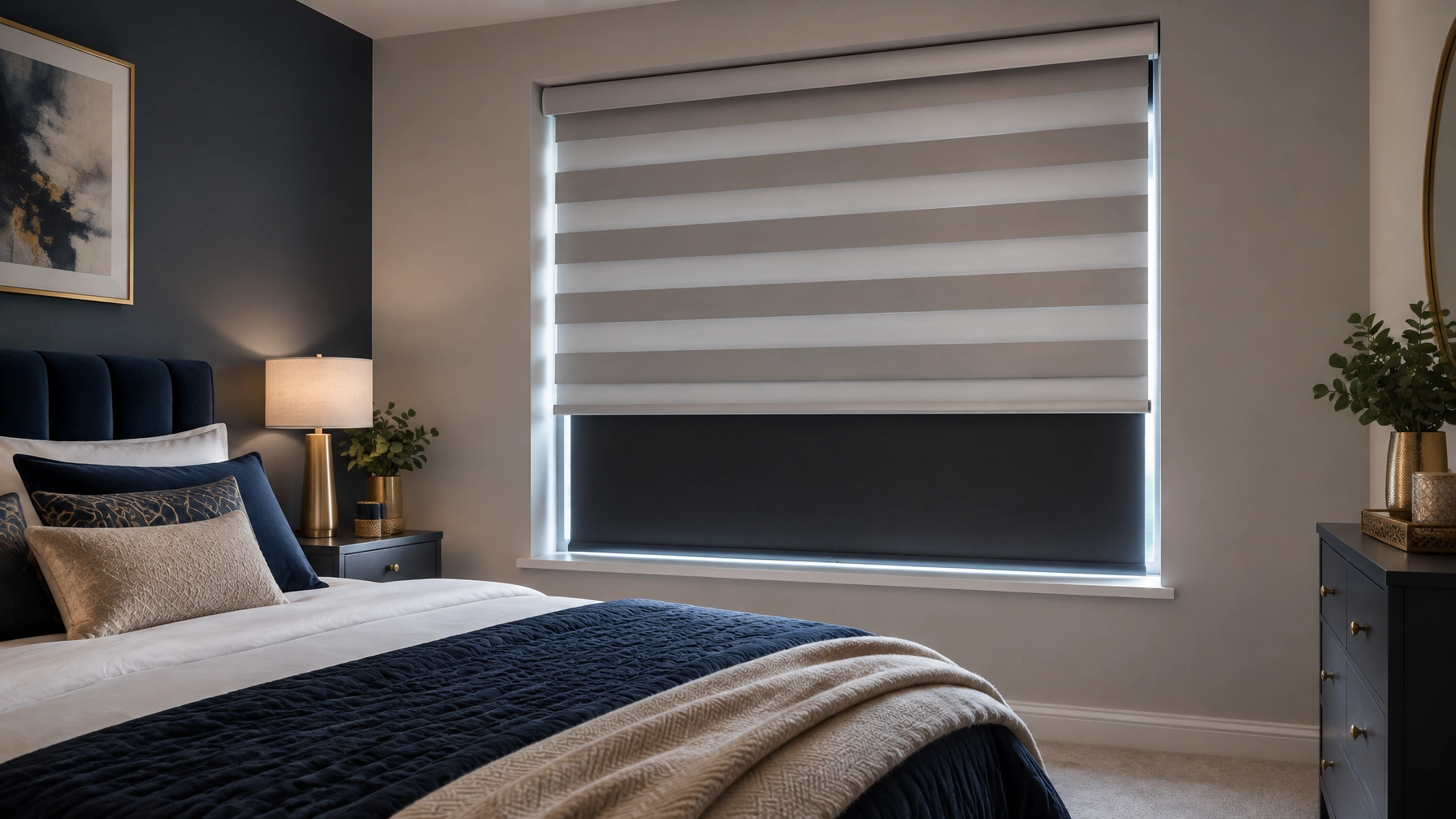
Day and night blinds, also known as vision or zebra blinds, use alternating bands of translucent and more opaque fabric. By moving the bands into alignment or offsetting them, you can change the amount of light and privacy in the room without fully raising the blind.

They are particularly useful when your household has different routines. You might need privacy and softer light while another member of the family wants natural daylight in the adjoining room. You can also adjust the blind gradually rather than choosing between fully open and fully closed.
They provide more everyday versatility than a standard blackout roller. A roller blind is clean, practical and often the stronger choice when your only priority is maximum darkness. A day-and-night blind gives you more intermediate settings for working, relaxing, watching television or resting between shifts.
They can look lighter and more contemporary. The alternating bands add texture and movement without the bulk of traditional curtains. This makes them a strong choice for modern bedrooms, home offices and shared living spaces.
They should not automatically be treated as a complete blackout solution. While the opaque bands can significantly reduce incoming light, the construction and side gaps mean a day-and-night blind on its own may not deliver the deep darkness that a very light sleeper needs. We recommend viewing it as a flexible control layer unless your specific fabric and fitting have been assessed for your requirements.
Day and night blinds versus blackout roller blinds
The right choice depends on how you use the room. There is no universal winner, but the comparison below can help you identify where each style works best.
Day and night blinds
Best for flexible light control: Adjust the bands to soften daylight, maintain privacy or create a darker setting.
Best for shared homes: Useful when one room needs to support different activities throughout the day.
Best for a contemporary finish: The slim, layered fabric creates a distinctive look without heavy curtains.
Important consideration: For daytime sleeping, the fabric alone may not block every beam of light around the edges.
Blackout roller blinds
Best for dedicated darkness: A suitably specified blackout roller is usually the stronger core layer for a shift worker’s bedroom.
Best for simplicity: Lower the blind fully when you need to sleep and raise it when you wake.
Best when carefully fitted: An outside-recess fitting, cassette or side channels can reduce the light leakage that standard installations may leave behind.
Important consideration: A roller blind offers fewer intermediate light settings, so it may be less versatile while you are awake.
Our recommendation is simple: choose day and night blinds when flexibility matters, but pair them with a properly fitted blackout layer when sleep quality depends on serious darkness.
The most effective approach: layer the whole system
A layered window treatment lets you separate your daytime and sleep needs instead of expecting one fabric to do everything.

Front layer: day and night blind. Use this as the visible, everyday blind. You can align the bands for privacy, offset them for filtered light or raise the blind when you want a clearer view.
Core sleep layer: blackout roller or cassette blind. Lower this when you need to sleep during daylight. A cassette or side-channel system can help minimise side gaps and create more reliable darkness.
Finishing layer: blackout curtains. Heavy curtains can cover the area around the blind and help reduce residual light at the top and sides. They may also soften outside noise, which is valuable if you sleep during school runs, deliveries or daytime traffic.
Optional back-up: a comfortable sleep mask. Even a well-designed system may not block light from a door, landing or another room. A contoured sleep mask adds another layer of protection, particularly if you sleep away from home.
This approach also protects your investment. Instead of replacing a beautiful day-and-night blind because it does not provide enough darkness on its own, you create a system where each layer has a clear job.
Professional measurement matters more for blackout
Precision is important for every made-to-measure blind, but it becomes especially important when your goal is to remove light.
Windows are rarely perfectly square. A recess can vary from top to bottom, particularly in older homes across Derry, Omagh and surrounding areas. Measuring in one place may leave you with a blind that catches, sits unevenly or allows more light through one side.
Handles and vents affect the fitting. A blackout blind may need to sit outside the recess or use a particular cassette depth. Our team checks the window handles, opening direction, recess depth and nearby obstructions before recommending a solution.
The surrounding area matters too. We look at the wall above the window, the skirting board below it and the position of curtain poles or radiators. The aim is to minimise unnecessary gaps without compromising how the blind operates.
Fiesta Blinds has more than 50 years of experience and manufactures bespoke blinds in our Derry facility. That in-house process gives us greater control over measurements, materials and quality from the initial consultation through to installation. You can learn more about why accurate fitting matters in our guide to professional measurement for made-to-measure blinds.
Motorised blinds for shift workers and shared households
Manual blinds can work perfectly well, but motorisation makes changing the room easier when you are tired, working unusual hours or trying not to disturb someone else.

Set a sleep routine. Use a remote, wall switch or app to lower your blackout blind when you arrive home from work. You can then keep the day-and-night blind at a privacy setting without needing to adjust it repeatedly.
Avoid unnecessary disturbance. If your partner works different hours, motorised blinds let you control the window quietly from the bedside or schedule changes in advance.
Consider hard-to-reach windows. Motorised systems are particularly practical for tall windows, roof lanterns and large glazed areas where manual operation is awkward.
Put safety first. Cordless operation can be a useful choice for homes with children or pets. Fiesta’s motorised blinds are available with remote, app and smart-home control options, depending on the chosen system.
Practical tips for a darker, calmer bedroom
Your blinds are central to the solution, but a few small changes can improve the result.
✅ Check the edges at the time you need to sleep. Daylight can hide gaps that become obvious when the room is otherwise dark.
✅ Cover the door gap. A draft excluder or door sweep can reduce light from a bright hallway.
✅ Turn screens away from the bed. Standby lights from chargers, televisions and smart devices can be surprisingly distracting.
✅ Use darker, room-facing finishes where appropriate. These can reduce reflections and help the room feel calmer, although the fit remains more important than colour alone.
✅ Keep the room comfortable. Daytime sleepers may need to manage temperature as well as light. Blackout curtains and cellular or layered blinds can add another barrier between the glass and the room.
✅ Open the room gradually when you wake. A motorised blind can be scheduled to open at your chosen time, allowing you to transition from darkness to daylight more gently.
Choosing the right system for your routine
If you occasionally nap during the day, a day-and-night blind may provide all the flexibility you need. If you work regular night shifts or are extremely sensitive to light, we recommend prioritising a dedicated blackout blind with careful edge coverage, then adding day-and-night blinds or curtains for everyday control.
✅ For maximum darkness: Choose a blackout roller with a cassette or side channels, supported by blackout curtains.
✅ For flexible daily use: Choose a day-and-night blind, particularly where privacy and filtered light matter.
✅ For different household schedules: Combine a day-and-night blind with a separate blackout layer.
✅ For convenience and safety: Consider a motorised, cordless system.
✅ For peace of mind: Use professional measurement and installation to protect the fit and long-term performance.
Fiesta Blinds offers made-to-measure window solutions across Northern Ireland, with expert advice, in-house manufacturing and professional installation. Explore our full range of blinds or book a free consultation to discuss your window, shift pattern and preferred level of darkness.
Our team is here to help you find a tailored solution with no obligation, so you can unlock better light control, protect your sleep and feel more comfortable at home.
Comments are closed