
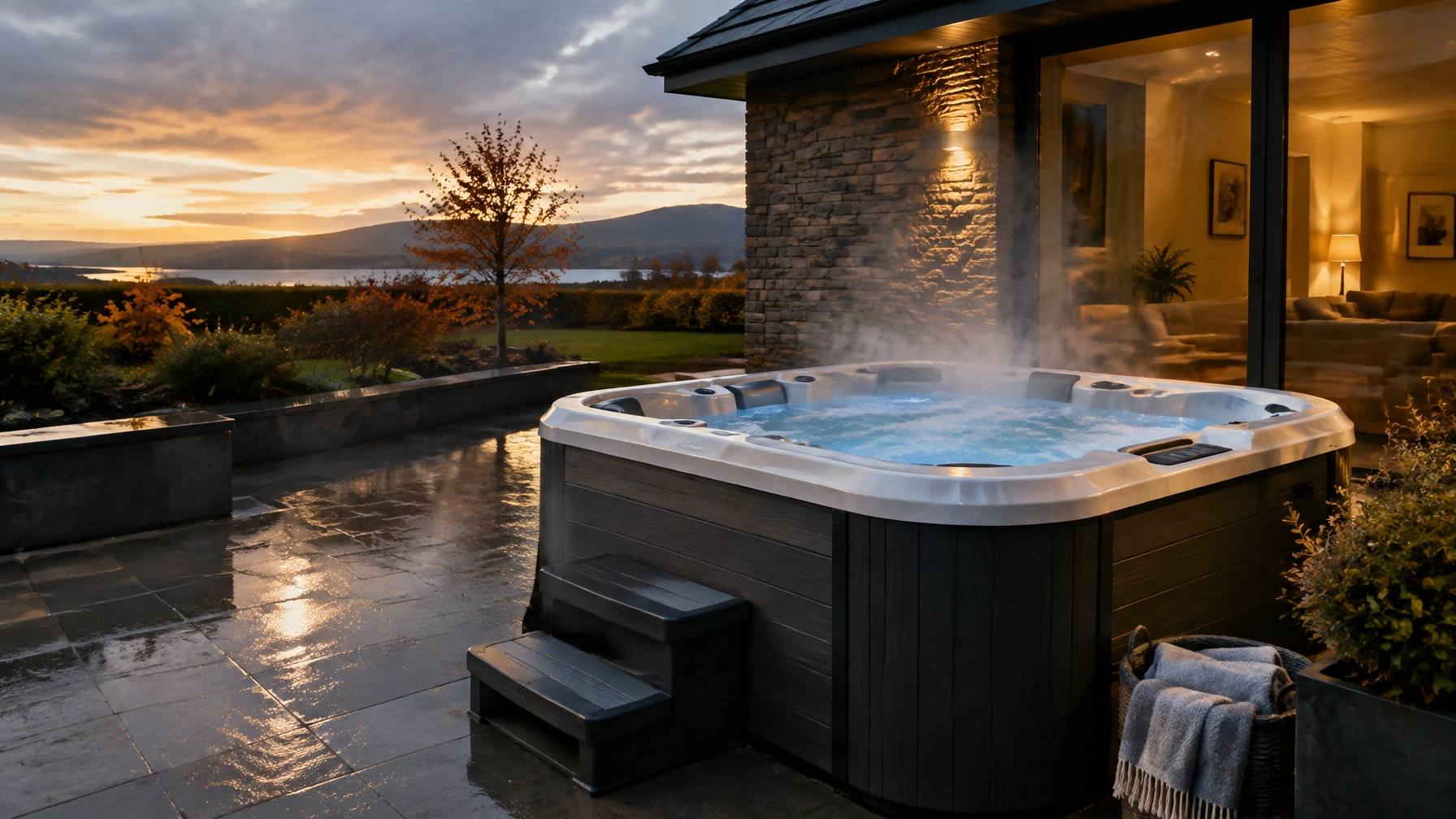
As autumn arrives in Northern Ireland, falling temperatures, strong winds and longer nights can make you wonder whether your hot tub is about to become an expensive luxury. The good news is that careful preparation can help you protect your spa, control energy use and continue enjoying warm, relaxing soaks throughout the colder months.
We believe winter is one of the best times to use a hot tub. With the right cover, sensible water care, effective filtration and reliable insulation, your spa can remain comfortable and efficient when the weather turns wet and cold.
Decide whether you will keep using your hot tub
Regular winter use usually means keeping the spa running.
If you use your hot tub every week, switching it off completely may not save as much as you expect. Allowing the water to cool significantly means the heater must work hard to bring it back to bathing temperature, while standing water and unheated plumbing can be vulnerable during freezing conditions.
For regular use, we generally recommend:
- ✅ Keeping the water at a steady temperature, typically around 37–39°C, in line with your manufacturer’s guidance.
- ✅ Using an economy, sleep or away setting when your control system provides one.
- ✅ Keeping freeze protection enabled.
- ✅ Leaving the cover securely fitted whenever the spa is not in use.
- ✅ Maintaining regular circulation and filtration cycles.
Your Artesian Spa manual should always take priority, particularly when selecting temperature and operating modes.
Infrequent use requires a different approach.
If you are only planning to use the spa occasionally, you may be able to reduce the temperature between visits. Ask our team for tailored advice on the most suitable setting for your model and usage pattern rather than simply switching off the power.
If you will not use the spa for several weeks or throughout the winter, arrange a proper winter shut-down service. Draining the shell alone is not enough: water can remain in pumps, heaters and pipework, where it may freeze and cause unnecessary damage.
Inspect and care for the insulated cover
Your cover is one of the most important energy-saving components.
A well-fitted, good-condition cover helps retain heat at the surface of the water. In Northern Ireland, where wind and rain can be persistent from October onwards, a damaged or waterlogged cover can make your heater work much harder.
Before winter sets in, check:
- The vinyl for cracks, splits or brittleness.
- The foam core for signs of waterlogging or sagging.
- The skirt for gaps around the spa shell.
- The hinges and handles for wear.
- The straps, clips and locking mechanisms for secure operation.
A cover that feels unusually heavy may have absorbed water and lost much of its insulating performance. If it no longer sits flush, contact your spa supplier before the coldest weather arrives.
Keep the cover secure during storms.
Never rely on the cover’s weight alone in an exposed garden. Fasten all locking straps and check them after periods of strong wind. Additional wind straps may be appropriate for particularly exposed locations, but avoid placing heavy objects directly on the cover, as this can damage the foam core or lifting mechanism.
Remove standing water and snow carefully. Do not drag sharp tools across the surface, and avoid putting your weight on the cover.

Balance your water chemistry for colder weather
Cold weather does not remove the need for regular testing.
Your water still needs the right sanitiser, pH and alkalinity levels, even if you use the spa less often. Balanced water helps protect bathers and reduces the risk of scale, corrosion and cloudy water.
We recommend:
- ✅ Testing the water at least twice a week, or more often after heavy use.
- ✅ Keeping pH within the range recommended for your chemicals and spa model.
- ✅ Maintaining chlorine or bromine at the correct level.
- ✅ Using a shock treatment according to the product instructions.
- ✅ Checking the water level so pumps and intakes remain properly covered.
Poorly balanced water can create deposits on internal components and make the heater less efficient. It may also mean you need to drain and refill the spa unexpectedly during the coldest part of winter.
For a fuller overview, read our guide to keeping hot tub water crystal clear.
Put safety first when using chemicals.
Always follow the instructions for your chosen products, never mix chemicals directly and allow the recommended circulation time before entering the water. If you are unsure about compatibility, ask our team or refer to your Artesian Spas documentation.
Keep filters clean and filtration consistent
A clean filter supports both hygiene and efficiency.
When filters become blocked with hair, oils and debris, the circulation system has to work harder to move water. That can increase energy use and put additional strain on pumps.
A practical winter routine is:
- Weekly: Remove the filter and rinse it thoroughly with a hose.
- Monthly: Use a suitable filter-cleaning solution to remove oils and mineral deposits.
- Throughout winter: Check for damage, distortion or excessive discolouration.
- As required: Replace filters that can no longer be cleaned effectively.
Keep your programmed filtration cycles active. It may be tempting to reduce them to save electricity, but insufficient circulation can affect water quality and freeze protection. Your spa’s recommended settings should guide the final schedule.
Clean water is also easier to heat.
Scale and deposits can act as a barrier around heating components. Looking after your water chemistry and filter is therefore not just a hygiene task; it is part of protecting your investment and keeping your spa operating efficiently.
Reduce heat loss with shelter and wind protection
Wind is a major source of avoidable heat loss.
A hot tub positioned in an exposed part of the garden will lose heat more quickly than one protected by suitable screening. This is particularly relevant in coastal and rural parts of Northern Ireland, where strong winds can continue well into winter.
You can improve protection by:
- Positioning the spa near a suitable wall or existing boundary.
- Adding a properly planned pergola or shelter.
- Using slatted screening that reduces wind without blocking ventilation.
- Keeping the cabinet area clear of leaves and debris.
- Planning a safe, non-slip route between your home and the spa.
Do not enclose the hot tub in a way that restricts ventilation or access to service panels. Any permanent structure should also account for electrical requirements, drainage, maintenance access and the weight of a filled spa.
Make winter use safer as well as more comfortable.
Use exterior lighting and slip-resistant surfaces around the spa. Keep towels and robes close by, remove standing water from access routes and take extra care when entering or leaving the tub. Never use glassware near the water, and avoid alcohol before or during a soak.
Why Artesian insulation matters in winter
Quality insulation helps the heat you pay for stay where it belongs.
Not all hot tubs are built to the same standard. A spa with limited insulation may lose heat rapidly through its cabinet, forcing the heater to operate more frequently as outdoor temperatures fall.
Artesian Spas are designed with energy efficiency, insulation and year-round performance in mind. Depending on the model, features such as high-density insulation, efficient pumps and a fitted thermal cover work together to support heat retention and help reduce avoidable running costs.
You can learn more about the difference insulation makes in our guide to Artesian Spas versus budget tubs.
A steady temperature protects your system and your routine.
For many owners, keeping the spa ready at a consistent temperature is more practical than repeatedly heating cold water from scratch. It also means you can enjoy an evening soak without waiting hours for the temperature to recover.
Our guide to hot tub running costs in Northern Ireland explains the other factors that influence energy use, including cover condition, insulation, usage and local weather.
Know when to arrange professional winterisation
Do not leave a filled spa switched off in freezing conditions.
If you are going away for an extended period or will not use the hot tub at all, professional winterisation can provide peace of mind. The process should normally include draining the shell, cleaning the surfaces and filters, isolating the power correctly and removing residual water from the plumbing and equipment.
This is a job where caution matters. Incomplete draining can leave trapped water in places that are difficult to access, creating a risk of freeze damage. Follow the manufacturer’s instructions, and contact a qualified spa technician if you are unsure.

Use this autumn hot tub checklist
Before the colder weather arrives, check that you have:
- ✅ Inspected the cover for damage or waterlogging.
- ✅ Tightened all cover straps and clips.
- ✅ Tested and balanced the water.
- ✅ Cleaned or replaced the filter.
- ✅ Checked the water level.
- ✅ Confirmed that filtration and freeze-protection settings are active.
- ✅ Looked for leaks, unusual noises or warning messages.
- ✅ Cleared leaves and debris from around the cabinet and service areas.
- ✅ Improved shelter and lighting where necessary.
- ✅ Booked a professional service if the spa needs attention.
Fiesta Spas supports homeowners across Northern Ireland with premium Artesian hot tubs, professional installation and practical aftercare advice. Our team can help you choose an efficient model, understand your controls and protect your spa throughout the season.
Enjoy a warmer, more efficient winter
Winterising your hot tub does not necessarily mean putting it away. For many households, the most cost-effective option is to keep the spa running at a steady temperature, protect it from wind, maintain clean water and make sure the cover is doing its job.
With advanced insulation and thoughtful care, an Artesian Spa can become a reliable winter retreat rather than an energy worry. If you would like advice on your current setup, winter maintenance or choosing a more efficient spa, contact Fiesta Group for tailored, no-obligation assistance.
Comments are closed